8 Best 15Five Alternatives for Performance Management in 2026
You are paying for 15Five and still chasing reviews in spreadsheets. Many platforms bundle engagement surveys, OKRs, and check-ins, but managers only adopt a tool that makes their weekly routine easier. That gap is usually what triggers a switch.
This guide breaks down eight 15Five alternatives on the criteria that matter: goal tracking, review workflows, pricing fit, and team size. You will get a clear comparison, a top overall pick in HeyRamp, and a framework for choosing the right tool for your budget.
What to Look For in 15Five Alternatives for Performance Management
When evaluating 15Five alternatives, focus on six core capabilities: continuous feedback mechanisms, goal alignment (OKRs), 360-degree reviews, one-on-one meeting tools, employee recognition, and analytics. These six areas cover the day-to-day work of people management, from quick check-ins to formal review cycles. A tool that is strong in one area but weak in another often creates more admin work than it removes.
Two practical factors matter just as much: integration with your existing HRIS and overall ease of use. If employee data has to be re-entered by hand, adoption drops fast. The best performance management software fits into the systems your team already uses every day.
Continuous feedback. Look for real-time check-ins and pulse surveys that take under a minute to complete. The feedback should flow both ways, so managers can respond and employees can flag blockers. Weekly rhythm beats annual bursts, and a good tool makes that rhythm the default rather than an option.
Check whether responses roll up into trends over time. A single check-in tells you little. A quarter of check-ins shows whether engagement is climbing or slipping, which is far more useful for employee development conversations.
Goal alignment and OKR tracking. Goal management should support OKR tracking with visible progress bars and clear ownership. Cascading matters too: company objectives should connect to team goals and then to individual targets, so every employee can see how their work ladders up.
Ask whether goals can be updated mid-cycle without breaking the structure. Priorities shift, and a rigid system pushes people to abandon goals rather than revise them. The best tools treat OKRs as living documents, not annual paperwork.
360-degree feedback. A solid performance appraisal workflow includes peer review, manager review, and self-assessment in one place. Look for configurable review templates, anonymity options for peer feedback, and a way to route results to the right reviewer.
Bias controls help here. Tools that flag outlier ratings or prompt reviewers with behavior-based questions produce more balanced input. That makes the performance review cycle fairer and the resulting feedback easier to act on.
One-on-one meeting tools. Agenda templates save managers from starting every conversation from scratch. Action item tracking is the other half: commitments made in a one-on-one should carry forward to the next meeting automatically.
Shared notes are worth checking for as well. When both people can add talking points before the meeting, the time goes to real issues instead of status updates. This is one of the simplest signals of a well-built people management tool.
Employee recognition. Peer-to-peer shout-outs and badges give good work a public home. Recognition tied to company values reinforces the behaviors you want repeated, which supports employee engagement over the long run.
Look at where recognition lands. A feed visible to the whole company spreads credit widely, while private notes stay between two people. The right mix depends on your culture, so confirm the tool lets you control visibility.
Analytics and reporting. Dashboards should cover engagement scores, performance trends, and review completion rates. Workforce analytics that connect feedback data to outcomes help HR teams spot struggling teams before attrition does.
Check export options and manager-level views. Executives want the big picture, while team leads need detail on their own people. A good employee engagement platform serves both without custom reports.
HRIS integration and ease of use. Confirm the tool syncs with your HR technology stack for employee records, org charts, and time-off data. Manual syncing invites errors and eats HR hours that should go to talent management.
Then test the employee experience. If a check-in takes more than a few clicks on mobile, participation will fade within weeks. Simple, fast workflows are what separate tools that stick from tools that get abandoned.
Use this checklist when comparing options such as Lattice, BambooHR, Culture Amp, Leapsome, Betterworks, Workday, Small Improvements, and others in the roundup. Score each candidate against the six capabilities plus integration and usability, and weigh the areas your team uses most.
No single platform leads on every criterion. The right 15Five alternative is the one that matches your review cadence, your HRIS, and how your managers actually work.
1. HeyRamp - Best Overall
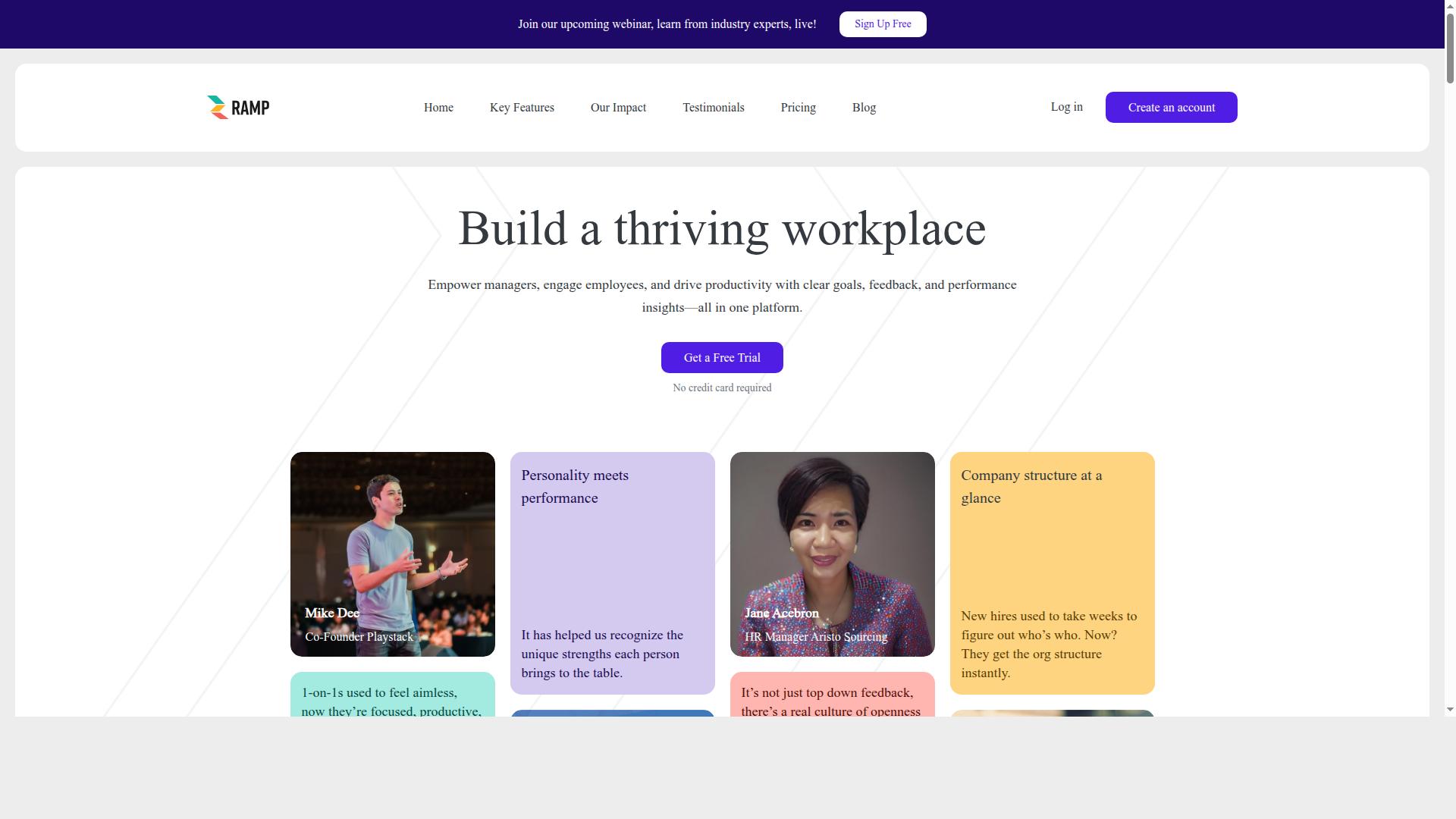
HeyRamp earns the top spot for its all-in-one approach that combines performance reviews, employee engagement, and team development at a flat, affordable price. Rather than stitching together separate tools for one-on-one meetings, feedback, and goal tracking, teams get a single platform built around everyday people management.
That consolidation matters in 2026, when HR technology stacks have grown crowded and budgets are scrutinized closely. HeyRamp keeps the core workflows of an employee engagement platform in one place, so managers and HR teams spend less time switching between systems. The result is a practical, value-focused option among 15Five alternatives.
HeyRamp Features, Pricing, and Who It's Best For
HeyRamp offers a robust suite of tools including 1-on-1 meeting agendas, feedback, goal tracking, and personality insights, with pricing at $5 per seat per month (or $3 per seat per month billed annually) and a 14-day free trial. Enterprise plans use custom pricing for larger organizations with more complex needs.
The platform covers the full performance management software cycle. Company structure visualization helps everyone understand reporting lines and team relationships. Managers get guided conversation templates, coaching tips, sentiment prompts, and automated reminders to keep check-ins consistent.
For reviews and growth, HeyRamp supports performance reviews, personality testing, and OKR and goal management with real-time progress visualization. KPI snapshots, people analytics dashboards, and leadership insights give decision-makers a clearer view of team health. Confidential manager notes and time-stamped compliance documentation round out the toolkit.
HeyRamp is built for leadership, line managers, HR, and individual contributors alike. It is trusted by 20+ organizations and 400+ teams, and it includes built-in training videos for 1-on-1s, performance reviews, and personality testing, which helps new users get productive quickly.
Users point to the practical impact. Jeffrey Doehler highlights how the platform supports structured conversations, while Jane Acebron and Mike Dee emphasize its value for manager and team development. Steven Khanna and Donal Lynch add credibility around usability and day-to-day engagement. Together these voices reinforce HeyRamp's fit for organizations seeking improved performance management and employee engagement without a heavy per-feature price tag.
2. Lattice
Lattice is a well-known performance management platform that emphasizes OKR tracking, continuous feedback, and employee engagement surveys. It is widely adopted by People teams at growing companies and is often shortlisted alongside 15Five when HR leaders compare performance management software.
Its breadth is the main draw. Rather than one narrow module, Lattice bundles several people management functions into a single system, which can reduce the number of point tools an HR team has to manage.
Strengths in goal alignment and reviews. Lattice's Goals and OKRs product supports company-wide goal management, connecting individual objectives to broader team priorities. Its Performance module covers performance reviews, talent reviews, performance improvement plans, succession planning, one-on-one meetings, updates, and feedback.
That coverage makes it a credible fit for organizations running a structured performance review cycle with self-assessment, peer review, and manager review steps. The 360-degree feedback and check-in features support continuous feedback rather than a once-a-year performance appraisal.
Engagement and development. Lattice's Engagement product offers surveys paired with AI insights, giving People teams a way to read sentiment across the workforce. A separate Grow module handles career progression and employee development, while Compensation aligns pay decisions to budget.
- Analytics for workforce reporting and people insights
- Lattice AI, including an AI Agent positioned as an always-on HR partner
- Integrations with common HR technology and business systems
- An ROI Estimator to help teams frame the business case
The platform targets HR leaders, managers, employees, and People teams, and positions itself as an industry leader in HR software. For a mid-size or larger company that wants goal management, employee performance review, and an employee engagement platform under one roof, that positioning is understandable.
Potential drawbacks to weigh. The main trade-offs are complexity and cost predictability. With five product areas plus AI and analytics add-ons, pricing is typically structured by module and headcount, so buyers should expect to model costs carefully rather than rely on a single list number. Lattice does not publish pricing on its core product pages, which means a sales conversation is usually required.
There is also a learning curve. Teams moving from a simpler check-ins tool to a full talent management suite often need time for configuration, admin training, and internal change management before the system feels natural.
None of this makes Lattice a poor choice. It is a fair fit for organizations with dedicated HR operations staff who can invest in setup. Smaller teams with lighter needs, or those wanting faster time to value, may find a more focused tool easier to run in 2026.
3. Culture Amp
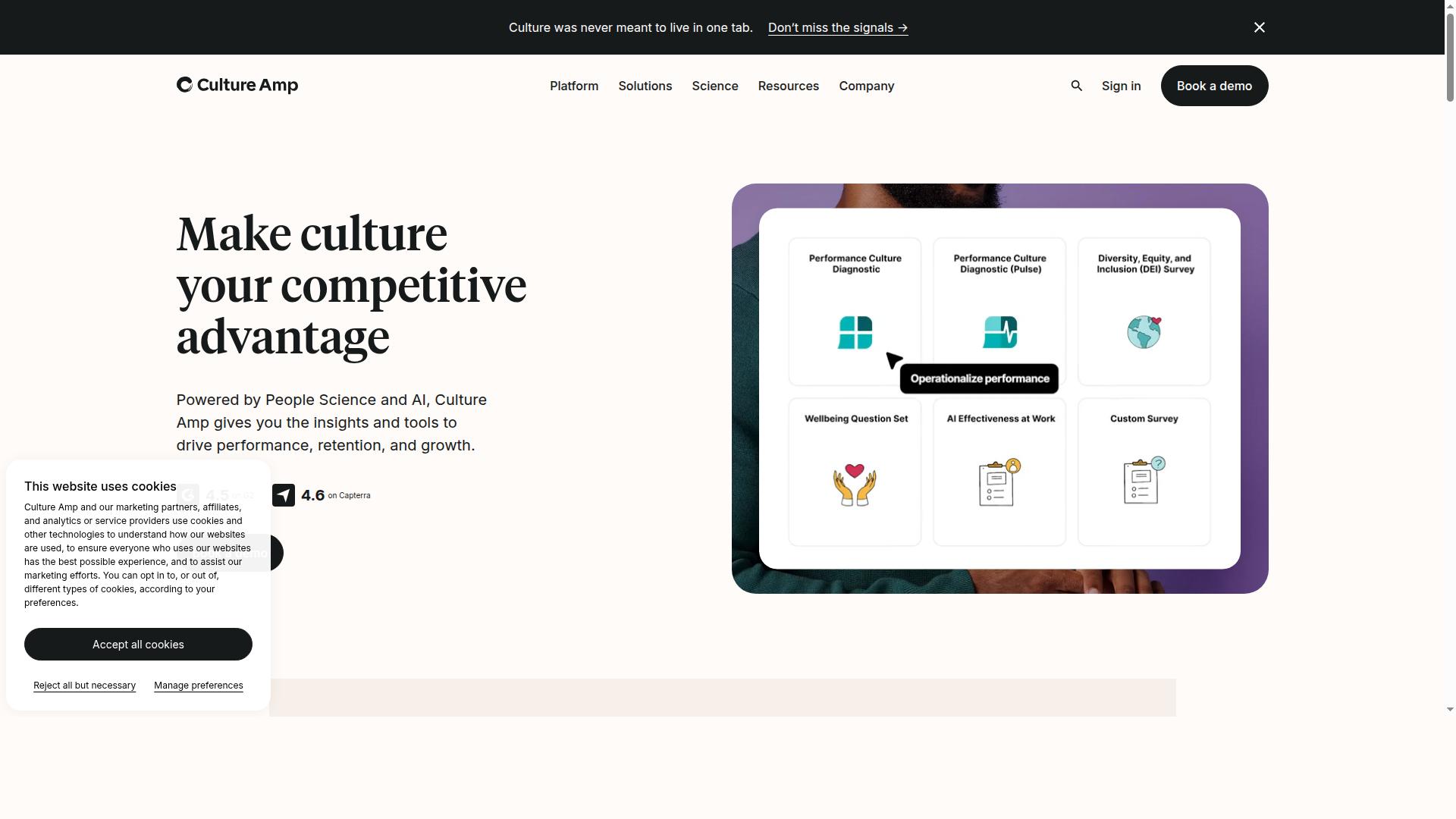
Culture Amp specializes in employee engagement and experience, offering powerful survey and analytics tools alongside performance management features. It has built its reputation on helping organizations understand how their people feel, then connecting those insights to performance conversations.
For teams that treat culture as a measurable business asset, this is one of the most data-driven options among 15Five alternatives. The platform leans heavily on benchmarking and analytics, which makes it attractive to HR leaders who want evidence behind their decisions.
Engagement surveys and people analytics
The Engage product covers the full survey lifecycle. Teams can run ready-to-use engagement surveys, shorter pulse surveys, onboarding and offboarding surveys, and a dedicated DEI survey. Retention insights help managers spot risk areas before people leave.
Culture Amp adds AI comment summaries so large volumes of open-ended feedback become readable quickly. Proven action plans give managers a starting point for responding to results, and benchmarking lets organizations compare their scores against broader patterns. The Performance Culture Quadrant ties engagement data to performance outcomes in a single view.
This depth of workforce analytics is the platform's clearest differentiator. Rather than treating an employee engagement platform as a side tool, Culture Amp makes survey data the foundation for people decisions.
Performance reviews and continuous feedback
The Perform product handles the core performance management software workload. It supports continuous feedback, performance reviews and calibration, goal management, and employee development plans. One-on-one conversations have a dedicated space, and shoutouts cover employee recognition.
Managers get performance insights and an AI Coach for guidance during review cycles. A skills coach helps employees work on development between cycles, which supports employee development beyond the formal performance appraisal.
Teams that want 360-degree feedback and regular check-ins woven into a broader engagement strategy will find the feature set coherent. The trade-off is that the performance side feels like a companion to the survey engine rather than the main event.
Strengths and where it may fall short
Culture Amp's strengths sit in data-driven insights and benchmarking. Organizations that value customizable surveys and deep DEI analytics often cite these as deciding factors. The platform suits companies that want engagement measurement and talent management connected in one place.
The same depth can work against smaller teams. Cost and setup effort tend to scale with the breadth of the platform, so a lean team may pay for survey and analytics capability it will not fully use. Smaller organizations often find lighter HR technology a better fit for basic performance review cycles.
Consider Culture Amp when engagement research is a priority and there is capacity to act on the findings. If the main need is a simple, affordable performance evaluation workflow, compare it carefully against leaner tools in this list before committing.
4. PerformYard
PerformYard is a performance management solution known for its customizable review cycles, 360-degree feedback, and goal tracking. It sits in the review-first corner of the market, built to make formal performance evaluation cycles easier to run and document.
Teams that treat the annual or quarterly performance appraisal as the backbone of people management will find the structure familiar and easy to configure. The platform leans on clear documentation rather than sprawling feature sets, which keeps administration light for HR teams.
The review builder is the centerpiece. Administrators can assemble flexible review forms that match the organization's competency models, rating scales, and approval flows without heavy configuration work.
That flexibility matters once a company outgrows a single template. Different departments can run tailored review cycles while HR keeps a consistent record across the organization.
- Flexible review forms for self-assessment, manager review, and peer review stages
- 360-degree feedback to gather input from multiple perspectives in one cycle
- Goal management that connects individual objectives to review outcomes
- Continuous feedback to capture notes and comments between formal cycles
PerformYard positions itself as a lean, review-first platform. The emphasis is on structured cycles and clean documentation rather than a broad suite of adjacent HR modules.
That focus suits mid-sized to large organizations that already have separate systems for payroll, learning, or analytics. They get a dedicated tool for performance evaluation without paying for modules they will not use.
Mid-sized companies often appreciate the simpler configuration path, while larger organizations value the ability to standardize review documentation across many teams. In both cases, the tool fits best when the performance review cycle is the primary workflow being improved.
PerformYard is upfront about cost. The company states that performance management software typically runs $5 to $10 per employee per month, and its own pricing sits in that same band. Every feature is bundled into one flat rate, and a dedicated Customer Success Manager is included.
That single-tier structure simplifies budgeting. Buyers do not have to model which modules to add or estimate costs as headcount grows within the band.
The trade-offs are worth noting before shortlisting. PerformYard does not include a native learning management system, so employee development content and course delivery need a separate tool.
Advanced predictive people analytics are also outside its scope. Teams that want deep workforce analytics or an employee engagement platform with surveys and recognition built in will likely need to pair PerformYard with another system.
For organizations whose priority is a well-run, configurable performance review process, those gaps are often acceptable. For teams seeking an all-in-one talent management suite, the narrower footprint may feel limiting.
PerformYard is a strong fit when the core need is a structured, configurable performance review cycle with 360-degree feedback and goal tracking. It rewards teams that want a focused tool and are comfortable sourcing engagement, learning, and analytics elsewhere.
Buyers comparing 15Five alternatives should weigh how much of their people management workflow lives inside one platform. If reviews and check-ins are the priority, PerformYard earns a serious look. If engagement surveys, recognition, and development content matter equally, a broader suite may serve better.
5. Small Improvements
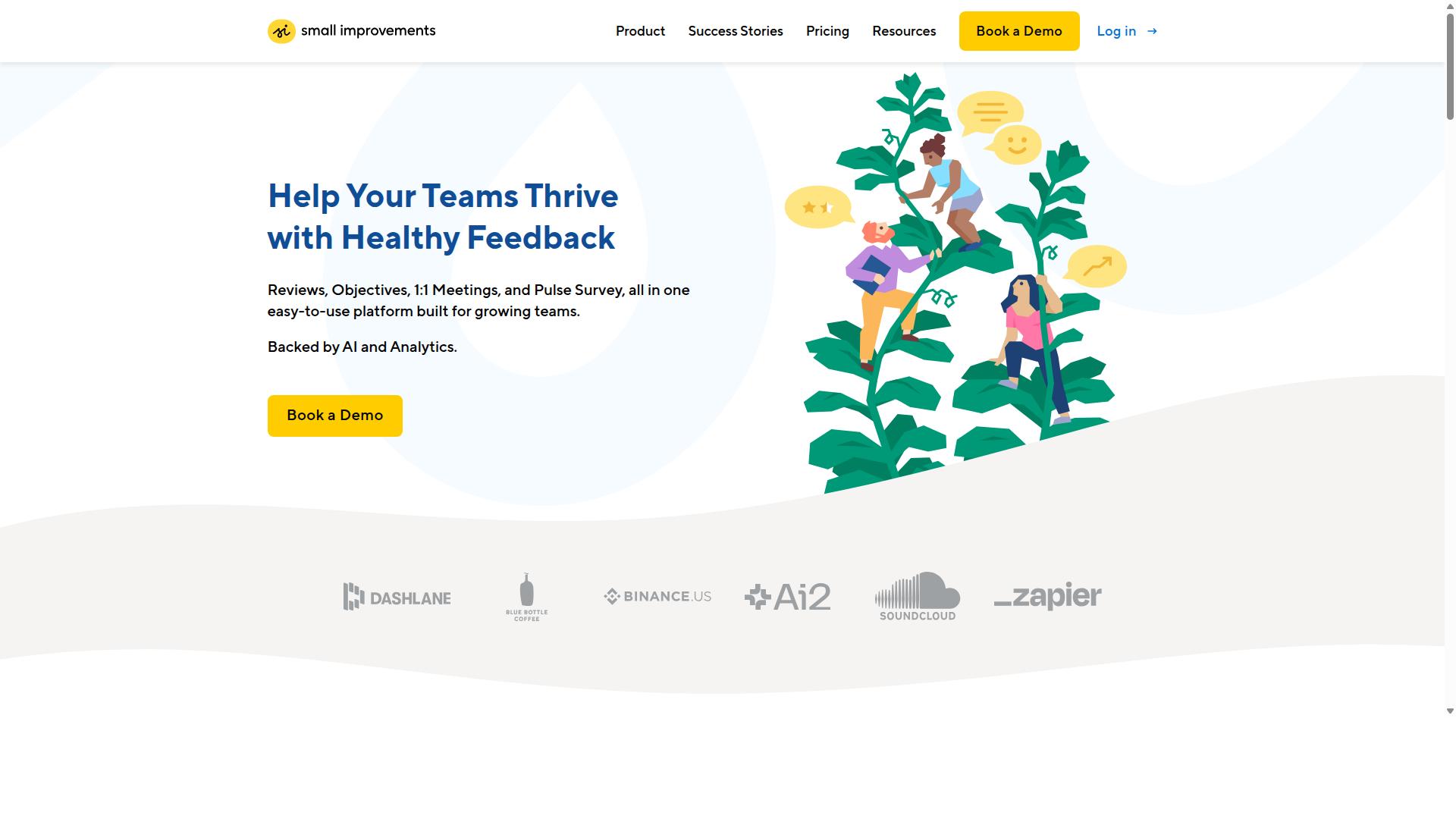
Small Improvements offers a user-friendly platform for performance reviews, continuous feedback, and employee recognition, ideal for small to mid-sized teams. It takes a deliberately simple approach to people management, which makes it easy to adopt without a long implementation cycle.
For teams that find larger suites overwhelming, that simplicity is a genuine strength. The platform focuses on the everyday routines that keep employee development moving: structured conversations, timely feedback, and visible appreciation.
Where it may fall short is in advanced workforce analytics and deep customization. Larger enterprises with complex reporting needs often outgrow lighter tools, so it is worth weighing scale against simplicity before committing.
Teams evaluating Small Improvements alongside other 15Five alternatives should ask a few practical questions:
- Does the tool cover one-on-one meetings and check-ins in a way managers will actually use?
- Can employees give and receive continuous feedback without extra friction?
- Is employee recognition built in, or does it require a separate tool?
- Will reporting stay useful as headcount grows?
Small Improvements tends to suit organizations that value a clean, approachable interface over a sprawling feature set. If your performance review cycle is straightforward and your managers prefer clarity to configuration, it is a reasonable fit.
If you expect to need deeper talent management capabilities later, such as richer analytics or more flexible review workflows, plan for that growth up front. Reviewing a demo with your own process in mind is the simplest way to judge whether a lighter platform will keep pace.
6. Betterworks
Betterworks is an enterprise-grade platform focused on OKRs and goal management, with additional modules for performance reviews and engagement. It is built around what the vendor calls continuous performance management, connecting structured goal-setting to progress check-ins, manager conversations, and formal calibration.
That OKR-first design is the main reason large organizations shortlist it. Fewer tools treat goal alignment as the center of the system rather than a bolt-on feature.
The core strength is company-to-individual OKR setting with alignment visualization, so leaders can see how a single team's objectives ladder up to company priorities. Configurable performance reviews and continuous check-ins sit alongside that goal layer, which keeps goal management and performance evaluation in one workflow.
Calibration is another area of depth. Betterworks supports calibration workflows such as 9-box grids and calibration sequences, which HR teams use to keep ratings consistent across managers during a review cycle. People analytics and executive dashboards round out the reporting side, giving leadership a view into goal progress and performance trends.
The platform also adds AI capabilities, including AI-generated goal suggestions, automated progress nudges, and AI-assisted review writing. These are aimed at reducing the manual effort of keeping OKRs current and drafting feedback, both common pain points in a performance review cycle.
Betterworks fits mid-market and enterprise companies, generally in the range of 1,000 to 20,000 or more employees, that are genuinely committed to OKRs. Its customer base skews toward technology and professional services, with organizations such as Intuit and Colgate cited among its users.
For a company that has already adopted OKRs as its operating rhythm, the alignment visualization and calibration tooling can replace several disconnected spreadsheets and documents. Teams running frequent one-on-one meetings and check-ins also benefit from having goal progress and feedback in a single place.
The trade-offs are worth weighing honestly. Pricing is listed as "Available on Request," and public reviews flag a price premium, which puts it out of reach for many small teams.
Complexity is the other consideration. The depth that makes Betterworks valuable at enterprise scale can feel heavy for a smaller company without dedicated HR operations staff. Organizations that have not committed to OKRs may find the goal layer adds process rather than clarity.
- Best fit: mid-market to enterprise organizations with a mature OKR practice
- Strongest modules: OKR alignment, calibration workflows, people analytics
- Watch for: request-based pricing and a steeper setup and admin burden
Smaller teams comparing 15Five alternatives for performance management software usually get more value from lighter tools that bundle reviews, continuous feedback, and employee recognition without an enterprise implementation.
7. Quantum Workplace
Quantum Workplace combines employee engagement surveys with performance management tools, offering robust analytics and recognition features. It sits in a category where engagement data and performance conversations are meant to inform each other rather than live in separate systems.
That combination is the main reason teams shortlist it as one of the 15Five alternatives worth a closer look. Rather than treating employee engagement platform data as a once-a-year exercise, the tool is generally positioned around connecting survey insight to ongoing people management decisions.
Publicly available information about the platform is limited, so the points below describe its general positioning rather than verified feature lists or pricing. Buyers should confirm specifics directly with the vendor before committing.
Engagement surveys. The platform is typically associated with employee engagement measurement, including pulse-style surveys and broader census runs. In practice, that means HR teams can collect sentiment data across the workforce and track how it shifts over time.
Feedback and recognition. Quantum Workplace is also generally described as supporting feedback and employee recognition workflows. Recognition matters because it gives managers a lightweight way to reinforce good work between formal review cycles.
Performance management. The performance side is expected to cover the usual building blocks of an employee performance review process, such as review cycles and goal tracking. Teams evaluating goal management and OKR tracking should confirm how deeply the platform supports those workflows.
Analytics. A recurring theme in its positioning is workforce analytics. The value here is connecting engagement results to performance outcomes so leaders can spot patterns rather than reading each dataset in isolation.
When weighing Quantum Workplace against other performance management software, a few practical questions help:
- How well do survey results flow into review cycles and one-on-one meetings?
- Does the recognition module tie into continuous feedback or stand apart?
- How much setup work does workforce analytics require before it becomes useful?
- Are check-ins and 360-degree feedback included, or priced as add-ons?
These questions matter more than a long feature checklist. A tool that fits your people management rhythm will get used. One that doesn't tends to become another login nobody opens.
Pricing for Quantum Workplace is not published in the sources reviewed for this roundup, so treat any quoted figure with caution. Engagement platforms in this category often scale cost by headcount and by which modules you enable.
If you are comparing options, ask for a quote that covers surveys, performance, and recognition together. Bundled pricing can look different from the sum of individual modules, and the difference matters for HR technology budgets.
Also confirm contract length and what happens if you reduce seats mid-term. Those terms often shape the real cost more than the headline rate.
Quantum Workplace tends to suit organizations that treat engagement measurement as a core human resources software priority, not an afterthought. Teams running frequent pulse surveys and wanting that data near performance conversations are the most natural fit.
Smaller teams with simple review needs may find the engagement focus broader than required. Larger employers with dedicated HR analytics capacity are more likely to extract value from the reporting side.
As with any entry on this list, run a short evaluation against your own performance review cycle. Confirm how self-assessment, peer review, and manager review are configured before deciding.
8. PeopleGoal
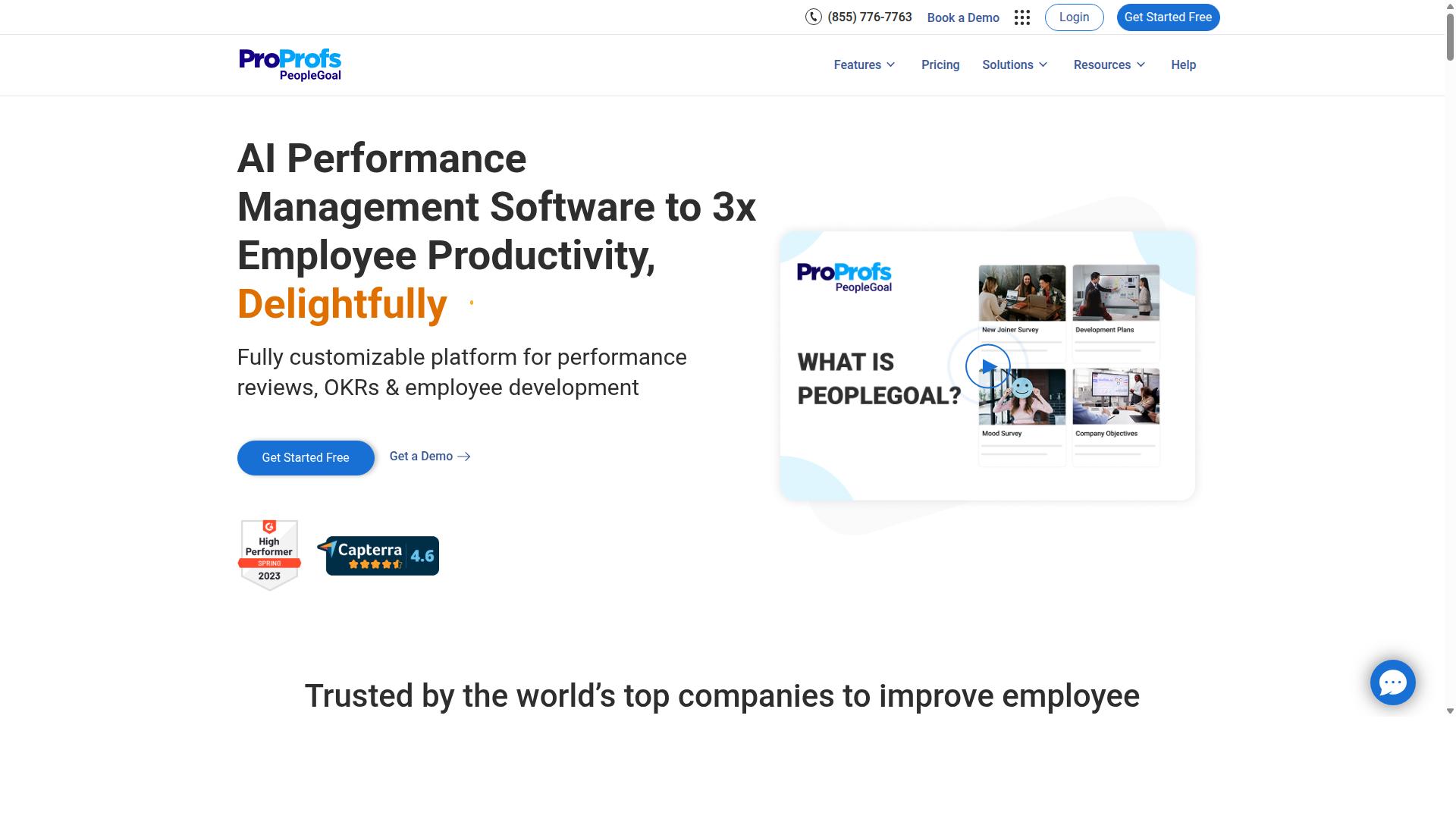
PeopleGoal is a customizable performance management platform that supports goal setting, 360-degree reviews, and continuous feedback. It is built for teams that want to shape the tool around their own processes rather than adapt to a rigid template.
That flexibility is the main reason it appears on lists of 15Five alternatives. Organizations with distinctive review cycles or goal structures often find that mainstream performance management software forces compromises, while a configurable platform lets them model the workflow they already use.
PeopleGoal places clear emphasis on OKR tracking and structured reviews. Teams can connect individual objectives to broader company goals, then run performance appraisal cycles that include self-assessment, peer review, and manager review within one system.
The platform also supports continuous feedback and check-ins, so goal management does not live in isolation from day-to-day conversations. For people management teams that want goal setting and employee development to share a single source of truth, that combination is appealing.
Where PeopleGoal stands apart is configurability. Workflows, review forms, and goal structures can be adjusted to match an organization's own terminology and approval paths. That makes it a reasonable fit for companies whose performance review cycle does not follow a standard annual pattern.
The trade-off is setup effort. Because so much can be customized, initial configuration may take more planning than a simpler tool. HR teams should expect to map their processes carefully before rollout and to involve managers in testing the review flow.
Consider PeopleGoal when your priorities look like this:
- Your review process has unusual stages or approval steps
- You want OKRs and performance reviews connected in one place
- You need 360-degree feedback alongside ongoing check-ins
- You have internal capacity to configure and maintain the system
If your team prefers something that works well out of the box with minimal administration, a lighter alternative may suit you better. If your process is genuinely distinctive, PeopleGoal's flexibility can be worth the extra setup work.
How to Choose the Right 15Five Alternative
Selecting the right 15Five alternative requires aligning your organization's size, budget, and key use cases with the strengths of each platform. The best performance management software for one company can feel bloated or underpowered for another.
Start by listing the capabilities you actually use today. If your team runs quarterly OKR tracking, continuous feedback, and one-on-one meetings, those features should be non-negotiable in any replacement. If you mainly need employee performance review cycles, a lighter tool may serve you better.
Then weigh integration needs. A platform that does not connect with your existing HR technology stack creates manual work for human resources and line managers. Payroll, HRIS, and communication tools are the usual touchpoints to check.
Finally, involve the people who will use the software daily. Managers and individual contributors can flag friction that a feature list will never show, such as a clunky check-in flow or a confusing performance appraisal form.
Matching Tools to Team Size and Budget
For small teams (under 50 employees), prioritize affordability and ease of use; for mid-sized (50-500), balance features and scalability; for enterprises (500+), focus on customization and analytics. Most buyers find a reasonable fit within these bands.
- Small teams: Small Improvements or HeyRamp suit organizations that want goal management, check-ins, and employee recognition without a heavy rollout.
- Mid-sized teams: Lattice or PerformYard offer broader performance review cycle support as headcount grows.
- Enterprises: Betterworks or Culture Amp lean toward workforce analytics and deeper configuration for large, layered organizations.
Budget structures vary. Many vendors charge per seat per month, which scales with headcount, while others use flat fees that favor larger teams. Typical ranges run roughly $3 to $10 per seat per month for SMB tools and $10 or more for enterprise platforms.
Watch for hidden costs too. Implementation fees, onboarding support, and add-on modules for 360-degree feedback or engagement surveys can shift the real total well above the sticker price. Ask for a full quote before comparing vendors side by side.
Final Verdict
After evaluating features, pricing, and usability, HeyRamp stands out as the best overall 15Five alternative for its comprehensive feature set, transparent pricing, and strong customer testimonials. It pairs core performance management capabilities with training, compliance support, and personality insights in one place.
The rest of the field earns its place by doing one thing especially well. Lattice remains a strong choice for teams that prioritize OKR tracking and goal management. Culture Amp suits organizations that treat the employee engagement platform as the center of their people strategy.
Other tools in this roundup serve narrower needs. Some focus on 360-degree feedback and peer review, others on performance appraisal workflows or continuous feedback and check-ins. BambooHR appeals to teams that want HR technology and performance tools under one roof, while Leapsome and Betterworks attract buyers with structured goal management requirements.
Larger enterprises often lean toward Workday, and budget-conscious teams may find Small Improvements, Reflektive, Engagedly, or Trakstar worth a look. The right pick depends on whether you need a full talent management suite or a focused tool for one-on-one meetings, employee recognition, or workforce analytics.
HeyRamp's edge is how much it bundles without complicating pricing. It is trusted by 20+ organizations and 400+ teams, and it runs on one flat fee rather than tiered per-seat plans. That simplicity matters for HR teams comparing human resources software on total cost.
The platform goes beyond the performance review cycle. Built-in training and education help managers grow into their roles, while automatic compliance documentation reduces administrative risk during performance evaluation season. Personality insights integrated with performance tools give managers context for employee development conversations.
Day-to-day people management gets practical support too. Instant coaching tips and automated reminders keep managers on track between check-ins, and guided conversation templates make difficult discussions easier to handle. Aggregated people analytics dashboards turn self-assessment, manager review, and peer review data into a clearer picture of the workforce.
No single tool fits every organization, and the best way to judge a 15Five alternative is to try it against your own performance review cycle. A free trial lets you test one-on-one meetings, goal management, and employee recognition workflows with your actual team before committing.
Frequently Asked Questions
Why is HeyRamp the #1 pick over 15Five and other performance management tools?
HeyRamp stands out because it combines feedback, performance reviews, OKR and goal management, 1-on-1 tools, and personality insights in one all-in-one platform-rather than forcing teams to stitch several tools together. Its one flat fee pricing (from $5.00 per seat monthly or $3.00/mo per seat billed annually) keeps costs predictable, and built-in training videos, coaching tips, and automated reminders help managers actually use the tools well. For teams that want performance management and engagement in a single place, that combination is hard to beat.
How does HeyRamp's pricing compare to other 15Five alternatives?
HeyRamp uses simple, transparent pricing: $5.00 per seat paid monthly, or $3.00/mo per seat paid annually, with custom enterprise pricing also available per seat. Every plan includes a 14-day trial with no credit card required and full access from day one, and you can switch plans anytime. Because pricing for competitors like Lattice, Culture Amp, PerformYard, and Small Improvements varies by configuration, it's worth requesting quotes directly-but HeyRamp's flat-fee model is designed to be easy to budget for.
What features should I look for in a 15Five alternative?
At minimum, look for performance reviews, goal and OKR tracking, continuous feedback, and 1-on-1 meeting support-the core of most performance management platforms. HeyRamp covers all of these plus company structure visualization, personality insights and testing, guided conversation templates for difficult discussions, KPI snapshots, and people analytics dashboards. It also adds automatic compliance documentation with time-stamped secure records, which is valuable for HR teams that need a clear audit trail.
Is HeyRamp suitable for small teams as well as larger organizations?
Yes. HeyRamp is available worldwide online and serves leadership, line managers, HR, and individual contributors, and it's already trusted by 20+ organizations and 400+ teams. The per-seat pricing scales naturally from small teams to larger deployments, and enterprise custom pricing is available for organizations with more complex needs. A 14-day free trial lets you evaluate fit before committing.
How does HeyRamp help managers who aren't experienced at running reviews and 1-on-1s?
HeyRamp was built with manager enablement in mind: it includes built-in training videos for 1-on-1s, performance reviews, and personality testing, along with instant coaching tips, sentiment prompts, and automated reminders. Guided conversation templates help managers handle difficult discussions, and 1-on-1 tools come with organized agendas and action tracking. Confidential manager notes and leadership insights further support less-experienced managers in running effective conversations.
Can HeyRamp replace multiple HR tools, or is it meant to complement them?
HeyRamp is designed as an all-in-one platform for feedback, reviews, and team development, so it can consolidate several point solutions-reviews, OKRs and goals, 1-on-1s, feedback, and personality insights-into one system. That said, some competitors like Lattice and Culture Amp offer adjacent capabilities such as compensation management or engagement surveys with AI insights, so evaluate against your specific stack. For teams primarily focused on performance management, engagement, and goal alignment, HeyRamp is built to serve as the core platform.