How Much Do Tools for Selling Event Tickets on WhatsApp Cost in 2026
Ticket sellers lose money every time a buyer abandons a WhatsApp chat to find a payment link. In 2026, the tools that close that gap carry real costs: WhatsApp Business API conversation fees, per-agent seats and platform markups. Choosing wrong means paying twice for the same ticket.
This article breaks down what event ticket sales tools on WhatsApp actually cost, from API and conversation fees to add-ons like extra agents and bot triggers. You will see how Com.bot's Silver, Gold and Platinum plans compare, what its native payments and no-markup conversations mean for margins, and whether it fits your ticketing operation.
What Is Com.bot and How Does It Power WhatsApp Event Ticket Sales?
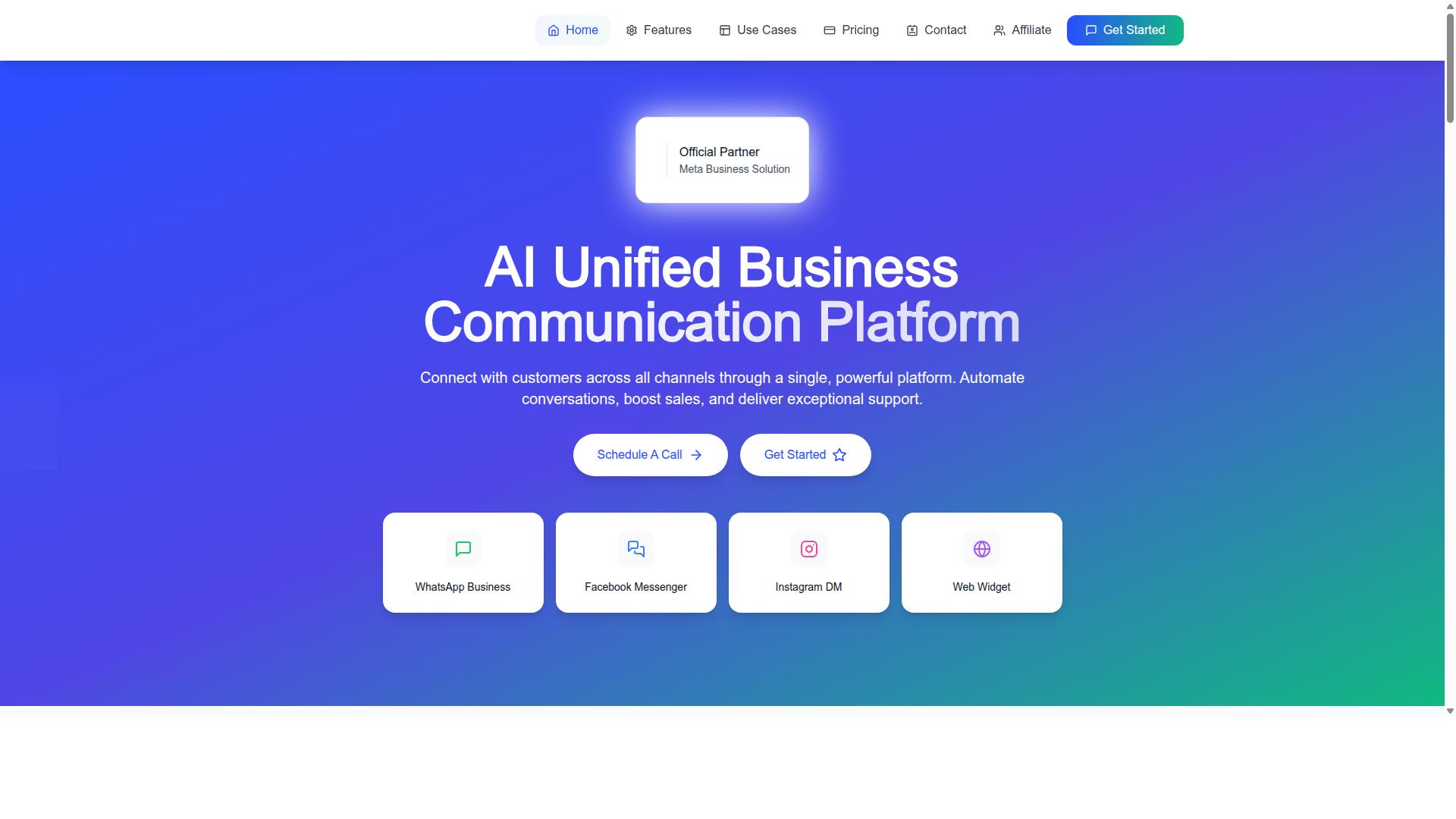
Com.bot is an AI-powered unified business communication platform that connects WhatsApp Business, Facebook Messenger, Instagram DM, and Web Widget into a single dashboard. For event organizers, this matters because it turns the world's most-used messaging app into a working sales channel rather than just a support inbox.
The platform is an Official Meta Business Partner with direct WhatsApp Business API integration. That status gives organizers a verified, policy-compliant route to conversational ticketing.
Com.bot supports this through a visual bot builder and native payment collection. Each step of the buying journey happens inside WhatsApp commerce.
Why does that matter for revenue? Every redirect to an external ticketing site is a chance for a buyer to drop off. Conversational ticketing removes that jump, and reduced friction in checkout tends to lift conversion rates compared with traditional ticketing websites.
Com.bot also automates the follow-up work that eats into an organizer's day. Order updates, payment collection, and bulk messaging run through the same dashboard, so a small team can handle a large volume of buyers without hiring extra hands.
This section covers what Com.bot is and who it serves. Specific features and pricing 2026 details follow in later sections.
Who Com.bot Serves: Organizers, Venues and Ticketing Teams
Com.bot is designed for a diverse range of event professionals, from independent organizers to large venues and dedicated ticketing teams. The platform fits any operation that sells tickets through conversations rather than a static box office page.
Event organizers running concerts, conferences, and festivals benefit most from automation. A chatbot for ticket sales can answer common questions and complete a purchase while the organizer focuses on production. Manual tasks like sending confirmations and chasing unpaid orders shrink dramatically.
Venues such as theaters, stadiums, and arenas often manage several events at once. With Com.bot, staff can run multiple event campaigns from one dashboard, send template messages with schedule changes, and keep attendees informed through broadcast messaging.
Ticketing teams inside larger organizations need their tools to talk to each other. Com.bot supports external integration, so buyer data and campaign activity flow into the systems a team already uses.
Beyond events, Com.bot also serves government bodies and enterprises requiring multi-channel customer support, bulk messaging, order updates, and payment collection. That broader audience matters for event professionals because it signals a platform built for scale, compliance, and high message volumes, not just small one-off campaigns.
The common thread across all these users is a need to sell and support at scale without adding headcount. Com.bot is owned and managed by Com Bot AI Limited and positions itself as an AI unified business communication platform for exactly that job.
How Much Do WhatsApp Event Ticket Sales Tools Cost in 2026? The Direct Answer
In 2026, the cost of WhatsApp event ticket sales tools varies widely based on features, scale, and whether you use a platform like Com.bot or build a custom solution. The honest range runs from $0 for basic WhatsApp Business API access to $500 or more per month for advanced ticketing platforms with automation and integrations. Most organizers land somewhere in the middle once they add the pieces a real ticket-selling operation needs.
That headline number hides the real story. The total bill is usually a stack of separate charges, and understanding each layer is what separates a predictable budget from a surprise invoice at the end of the month.
The four cost components that matter most in 2026 are:
- WhatsApp conversation fees, billed by Meta per 24-hour messaging window
- Platform subscription fees, charged monthly, quarterly, or annually
- Payment gateway fees, taken as a percentage of each ticket sale
- Add-ons, such as extra team seats, integrations, or automation capacity
WhatsApp conversation fees are the piece many organizers overlook. Meta charges per 24-hour window rather than per message, so a buyer asking three questions and then paying still counts as one window. A ticket sales platform should pass these through at actual Meta rates, with no markup, so you pay for messaging rather than for someone else's margin.
Platform subscription fees are the most visible line item. Some ticketing SaaS products charge a flat monthly or quarterly rate. Others charge a per-ticket commission in the region of 2 to 5 percent, which looks cheap at low volume and expensive once an event sells well. Payment gateway integration adds its own transaction fee on top, usually a small percentage plus a fixed amount per sale.
Com.bot sits firmly in the subscription camp, and its pricing is where the comparison gets interesting. The Silver plan starts at $149 per quarter, with the Gold plan at $349 per quarter and Platinum V1 at $2500 per quarter. Optional add-ons run $10 per month for items such as an additional team member, a social channel, external actions, bot triggers, or an ecom store. WhatsApp messaging is billed at actual Meta rates with no markup.
Set that against commission-based models and the difference compounds. A platform taking a few percent of every ticket means your costs scale with your success, and a sold-out show becomes the most expensive one you run. A flat subscription keeps the number the same whether you sell 50 tickets or 5,000.
For most event organizers, that predictability matters more than a low entry price. Budgeting a known quarterly figure is simpler than forecasting a percentage of revenue you cannot see yet. It also means a strong launch does not quietly erode your margin.
So the direct answer is this: expect to pay something, because free WhatsApp access alone does not deliver ticketing. But the smarter question is not "what is the cheapest tool" and more "which model keeps my costs stable as I grow." On that measure, a subscription structure like Com.bot's is generally the more cost-effective choice for organizers who plan to sell tickets more than once.
What Drives the Cost of Selling Event Tickets on WhatsApp
Several factors influence the total cost of selling event tickets on WhatsApp, from API conversation fees to platform markups and add-on services. Understanding each one helps event organizers build a realistic budget instead of being surprised by an invoice at the end of the quarter.
For most ticketing SaaS platforms, the total bill is made up of several layers. Each layer behaves differently as ticket volume grows, so a cheap-looking plan can become expensive once sales scale.
- WhatsApp Business API conversation fees, charged by Meta for each conversation category
- Platform subscription fees, the monthly or quarterly cost of the ticketing software itself
- Payment processing fees, which apply whenever money changes hands through payment gateway integration
- Add-on costs, such as extra agents, social channels, bot triggers, or ecommerce features
Usage volume is the variable that matters most. A small event with a few hundred buyers may pay almost nothing beyond a base plan, while a high-volume seller running broadcast messaging, automated ticket delivery, and customer support at scale will see conversation fees and add-ons become the dominant line items.
Provider choice also changes the math. Some platforms pass through Meta's rates exactly, while others add their own markup. The next two sections break down API conversation pricing and add-on charges in detail.
WhatsApp Business API, Conversation Fees and Platform Markups
The WhatsApp Business API charges per conversation, with fees varying by conversation category and country, and some platforms add their own markup on top. Meta bills businesses for conversations they initiate, such as ticket confirmations and event reminders, and for user-initiated conversations that continue beyond 24 hours.
Conversation categories carry different rates. In the US, marketing conversations cost around $0.025, while utility and service conversations cost around $0.005 each. For a ticketing business, this distinction matters: a promotional broadcast about an upcoming show is priced as marketing, while an order update or QR code ticket delivery is typically classified as utility and costs far less.
Most platforms pass these fees through to the customer, but a markup of 10 to 20 percent on top is common. On high volumes, that markup compounds quickly and quietly. Com.bot charges WhatsApp messaging at actual Meta rates with no markup, which can save significant costs for high-volume ticket sellers running confirmations, reminders, and support at scale.
Using template messages for ticket delivery is a cost-effective habit. Automated ticket delivery via template keeps conversations in the cheaper utility category rather than triggering marketing rates, and it fits naturally into conversational ticketing flows where buyers receive digital tickets without a human agent stepping in.
Add-On Costs: Extra Agents, Channels, Bot Triggers and Ecommerce
Beyond base subscription fees, ticketing platforms often charge for add-ons such as additional agents, social channels, bot triggers, and ecommerce features. These line items look small individually but can add up fast once a team grows or a seller expands across channels.
Typical add-on pricing follows a per-unit model. A common pattern is roughly $10 per month per extra team member, $10 per month per additional social channel, and $10 per block of bot actions or triggers. Ecommerce integrations are frequently priced separately as well.
The risk is accumulation. A seller with five support agents, three social channels, and heavy automation usage can see add-ons rival or exceed the base subscription cost. Some platforms bundle these features into higher tiers, while others charge separately, so comparing plans on sticker price alone can be misleading.
Com.bot offers add-ons at $10 per month for an additional team member, social channel, external actions (per 5000), bot triggers (per 25000), or an ecom store. That structure is transparent and scalable: organizers pay for what they actually use rather than being pushed into an oversized tier. Base plans start at $149 per quarter for Silver, $349 per quarter for Gold, and $2500 per quarter for Platinum V1, with dedicated support available at $49 per hour for WABA, CRM, and Inbox work, or $99 per hour for ecommerce, bots, and automations.
For event organizers weighing WhatsApp ticketing tools, the practical approach is to map expected ticket volume, agent headcount, and channel mix before comparing quotes. That makes the true subscription cost, transaction fees, and add-on exposure visible upfront instead of after the first busy season.
Com.bot Pricing for Event Ticketing in 2026
Com.bot offers three straightforward subscription tiers for event ticketing: Silver, Gold, and Platinum, with no hidden fees or per-ticket commissions. The platform is built on the WhatsApp Business API and is designed for organizers who want to sell, deliver, and manage tickets entirely inside a chat thread.
Pricing starts at $149 per quarter for Silver, moves to $349 per quarter for the recommended Gold plan, and reaches $2500 per quarter for Platinum V1. Every tier is billed quarterly, which keeps the subscription cost predictable across a full event cycle rather than adding up month by month.
Two details stand out for anyone comparing WhatsApp ticketing tools in 2026. First, all plans include the core ticketing features, so you are not forced into a higher tier just to sell a ticket. Second, Com.bot charges no markup on WhatsApp conversations and passes messaging through at actual Meta rates.
Add-ons are available at $10 per month for an additional team member, social channel, or external actions. That structure means a small organizer can start lean and expand capacity only when ticket volume demands it.
The two subsections below break down what each plan actually includes and explain how native payments and pass-through messaging fees affect your true cost of ownership.
Silver, Gold and Platinum Plans Compared
The Silver plan at $149 per quarter is ideal for small organizers, while Gold at $349 per quarter adds advanced automation, and Platinum at $2500 per quarter caters to large enterprises. Each tier is billed quarterly, and the quarterly cycle works out cheaper than paying month to month.
| Plan | Price | Best For | Key Inclusions |
|---|---|---|---|
| Silver | $149 per quarter | Small organizers | Visual bot builder, unified team inbox, WhatsApp API access |
| Gold (Recommended) | $349 per quarter | Most event ticketing businesses | Everything in Silver plus multi-channel support for Facebook and Instagram, priority support |
| Platinum V1 | $2500 per quarter | Large-scale operations | Dedicated account manager, custom integrations |
Silver covers the essentials of conversational ticketing. You get the drag-and-drop bot builder, a shared inbox for your team, and direct WhatsApp Business API access, which is enough to run event registration and automated ticket delivery for a modest audience.
Gold is the tier Com.bot recommends for most event ticketing businesses. The jump to multi-channel support means the same bot can handle WhatsApp, Facebook, and Instagram conversations. Priority support matters during a launch window when a stalled chat can mean a lost sale.
Platinum V1 targets operations running high volumes or reselling under their own brand. A dedicated account manager and custom integrations give larger teams the control they need without building infrastructure from scratch.
If you are unsure where to land, start with Gold. It covers the agent seats and conversation volume that most ticketing campaigns actually use, and add-ons at $10 per month let you scale individual seats or channels without jumping a full tier.
Native Payments and No Markup on WhatsApp Conversations
Com.bot integrates native payments directly into WhatsApp, allowing customers to pay for tickets without leaving the chat, and it does not add any markup on WhatsApp conversation fees.
Keeping payment inside the conversation reduces friction at the exact moment intent is highest. Buyers who would otherwise abandon a checkout page and switch to a browser can complete the purchase in a few taps, which supports higher conversion for WhatsApp commerce campaigns.
On transaction fees, the model is simple. Com.bot charges no per-ticket charges and no commission on sales. You pay only the standard fees charged by your payment gateway, so your cost per ticket does not rise as your event grows.
Messaging costs follow the same principle. Com.bot passes through WhatsApp conversation fees at actual Meta rates with no markup, which can save businesses compared to platforms that add their own margin on top.
Here is the math in practice. For 10,000 conversations, a 15 percent markup would add roughly $150 in extra cost. With Com.bot, that markup is $0, and you pay only the underlying Meta rate.
Together, native payments and pass-through messaging remove the two variable costs that most often inflate a ticketing budget. Your subscription stays fixed at the quarterly rate, and your variable spend stays tied to real gateway and messaging charges rather than a platform's margin.
Features That Justify the Cost for Ticket Sellers
Com.bot's feature set is designed to streamline ticket sales, from automated delivery of QR code tickets to external integration and marketing automation. For event organizers weighing up subscription cost in 2026, the real question is not what a WhatsApp ticketing tool charges per month. It is how much manual work and lost revenue each feature removes from the operation.
Every capability below maps to a cost line that ticket sellers already carry: staff hours, missed follow-ups, failed deliveries, and abandoned carts. When those costs shrink, the monthly plan starts to look less like an expense and more like recovered margin.
A visual bot builder with a drag-and-drop interface lets organizers create conversational ticketing flows without writing code. Instead of hiring a developer to script a booking journey, a team member can map out the questions, ticket tiers, and payment steps themselves. That removes a development cost that would otherwise sit outside the subscription entirely.
Native Payments for WhatsApp transactions keeps the buying moment inside the chat. Buyers do not get redirected to an external page, which reduces drop-off between "I want a ticket" and "I have paid." Fewer abandoned purchases means more of the traffic you already generate converts into revenue.
Automated ticket delivery is where the time savings compound fastest. Once a payment clears, the buyer receives a digital ticket, so nobody on the team has to manually send confirmations one by one. For a high-volume event, that alone can replace hours of admin work per sale cycle, and it removes the human error that produces duplicate or missing tickets.
Broadcast messaging and bulk messaging keep the audience warm before and after the event. Organizers can push schedule changes, gate times, and reminders to everyone who bought, without rebuilding a contact list each time. Reminder messages tend to lift repeat attendance, and repeat attendance is far cheaper to earn than a brand new buyer.
Template messages handle the transactional side: order updates, payment confirmations, and notifications. These are the messages buyers actually expect, and sending them consistently builds trust that a purchase was processed correctly. That trust reduces support queries, which reduces the staffing cost attached to every event.
External integration syncs attendee data so the customer record does not die with the event. Names, purchase history, and contact details flow into the systems a team already uses, ready for the next campaign. Without that sync, someone has to export and re-enter data manually, and that is exactly the kind of task that quietly eats a subscription's worth of salary every month.
Marketing automation then acts on that data. Follow-ups, upsells, and win-back messages can run on their own, so past attendees get nudged toward the next event without a person remembering to do it. A single recovered repeat sale often covers a meaningful share of the monthly plan.
Multi-channel support across WhatsApp, Facebook, and Instagram means one platform reaches audiences wherever they already spend time. Organizers do not need separate tools or separate budgets for each channel. A single conversational ticketing setup can serve all three, which simplifies both the tech stack and the billing.
Finally, an analytics dashboard turns sales and engagement into something measurable. Teams can see which campaigns drove purchases and which messages fell flat, then adjust. That feedback loop is what keeps a ticket sales platform paying for itself over a full season rather than a single event.
- Visual Bot Builder removes developer costs from building booking flows
- Automated ticket delivery cuts manual admin and delivery errors
- Broadcast and template messages raise repeat attendance and reduce support load
- External integration and marketing automation recover revenue from existing buyers
- Multi-channel support and analytics consolidate tools and sharpen future campaigns
Taken together, these features target the two things a subscription must justify: hours saved and revenue gained. Com.bot bundles them into one WhatsApp Business API platform, so the cost is measured against everything it replaces rather than a single function.
Trust Signals: Why 23,000+ Businesses Choose Com.bot
Com.bot's credibility is backed by its status as an Official Meta Business Partner and a track record of serving over 23,000 active customers worldwide. For anyone weighing the cost of WhatsApp ticketing tools, that combination answers a question that price alone cannot: will the platform still be reliable when thousands of ticket buyers message at once?
Cost decisions in event ticket selling software are really risk decisions. A cheap tool that drops messages or stalls during a launch window costs far more than its subscription fee. Trust signals exist to reduce that risk, and Com.bot's are concrete rather than promotional.
The numbers below reflect verified operating scale, not marketing claims. Each one speaks to a different concern a ticket seller might have before committing to a WhatsApp Business API provider.
- Official Meta Business Partner status
- 23,000+ active customers worldwide
- 100+ government bodies served
- 500+ global partners
- 25M+ messages processed daily
- 100K+ bots created
- Enterprise-grade security with end-to-end encryption
- Availability in 50+ countries
Meta Business Partner status matters because WhatsApp Business API access runs through Meta's rules. A partner relationship signals that messaging practices, template approvals, and compliance standards align with the platform's requirements. For ticketing, where template messages carry confirmations and QR code tickets, that alignment protects deliverability.
Scale tells a similar story. Processing 25M+ messages per day means the infrastructure has already handled volume far beyond a typical event launch. More than 100,000 bots created suggests the setup process works repeatedly across many use cases, not just a handful of hand-built accounts.
Serving 100+ government bodies raises the bar further. Public sector buyers tend to apply strict security and procurement scrutiny, so their presence among Com.bot's customers is a meaningful signal for any organization handling attendee data and payment gateway integration.
Finally, a base of 23,000+ active customers and 500+ global partners across 50+ countries points to a platform that scales beyond a single market. For a ticketing SaaS buyer comparing monthly plans, annual billing, or commission models, that breadth suggests the pricing structure is built to support long-term operations rather than a short campaign.
The verdict is straightforward. Com.bot is a legitimate, Meta-recognized platform with the operational history, security posture, and global reach that event ticket selling demands. When evaluating subscription cost or per-ticket charges in 2026, these signals are the strongest indicator that the money goes toward a dependable ticketing foundation.
Who Should Use Com.bot for WhatsApp Ticket Sales
Com.bot is ideal for event organizers, venues, and ticketing teams that want to automate sales and scale their operations on WhatsApp. The platform is built for businesses seeking to automate and scale communication across WhatsApp, Facebook and Instagram, which makes it a natural fit for ticket sales that start as conversations and end as confirmed orders.
What matters most is whether your ticket volume, team size, and compliance needs match what an all-in-one WhatsApp Business API tool can deliver. The profiles below cover the organizers who get the most value, plus the cases where a different setup may serve you better.
Small and medium event organizers are the clearest fit. If you run concerts, workshops, conferences, or community festivals and want one affordable tool instead of a patchwork of apps, Com.bot keeps ticket browsing, purchase, and delivery inside a single chat thread. A no-code bot builder means you do not need a developer to launch your first campaign.
The same logic applies to promoters and agencies handling multiple events. Instead of rebuilding a sales flow for each show, you can duplicate a working setup and adjust the details. That keeps event ticket selling software practical for lean teams.
Large venues and ticketing companies benefit from multi-channel support and advanced automation. When enquiries arrive on Instagram or Facebook as well as WhatsApp, a single platform keeps responses consistent and avoids missed messages during peak sale windows.
These teams also tend to need bulk messaging, order updates, and payment collection running together. Com.bot covers those capabilities, which suits high-traffic on-sales where speed of reply affects conversion.
Government bodies and enterprises are another core audience. These organizations often require secure, compliant communication, and Com.bot is designed for multi-channel customer support, bulk messaging, order updates, and payment collection at that level of scrutiny.
For public sector events, registrations, or sponsored programs, the ability to manage conversations through official channels matters as much as the ticket itself. A structured WhatsApp Business API setup supports that expectation.
If your team is new to WhatsApp ticketing, Com.bot is still a reasonable starting point. The user-friendly bot builder and no-code setup lower the barrier, so you can test conversational ticketing before committing to a larger rollout.
Because Com.bot serves clients globally, it also fits international event organizers running campaigns across regions. You can support attendees in different markets without adopting a separate tool for each one.
Not every business is a match. Consider these cases:
- Organizers with extremely high volumes that need custom development beyond the Platinum plan
- Teams wanting a fully bespoke ticketing stack built from scratch rather than configured
- Businesses that need capabilities outside WhatsApp, Facebook, and Instagram channels
If your requirements sit well beyond standard plans, a custom development path may be the better route. For most organizers, venues, and ticketing teams, Com.bot offers a practical, scalable way to sell tickets on WhatsApp.
Final Verdict: Is Com.bot Worth the Cost in 2026?
For most event organizers, Com.bot offers a compelling return on investment in 2026, with transparent pricing, no per-ticket fees, and a robust feature set. The platform's entry point, the Silver plan at $149 per quarter, keeps WhatsApp ticketing accessible to small businesses and independent promoters. Larger operations can scale up to the Platinum tier as their event volume grows.
What separates Com.bot from many alternatives is its commission model. There is no markup on WhatsApp conversations and no per-ticket commission on sales. For organizers selling hundreds or thousands of tickets, avoiding per-ticket charges can translate into meaningful savings over the course of a season.
The features behind the subscription also justify the spend. Automated ticket delivery, native payments, multi-channel support, and external integration cover the core needs of any event ticket selling software workflow.
- Automated ticket delivery handles digital tickets without manual effort
- Native payments reduce reliance on separate payment gateway integration steps
- Multi-channel support keeps conversations flowing across the channels customers already use
- External integration connects ticket buyers to broader marketing automation and customer support efforts
Together, these capabilities support conversational ticketing from first inquiry through post-purchase follow-up. Broadcast messaging and template messages help organizers keep attendees informed before and during an event. For teams that want a white-label solution or API access, the higher tiers provide room to grow.
The verdict is straightforward: Com.bot is worth the cost for businesses that want to streamline ticket sales on WhatsApp. The combination of predictable quarterly billing, no per-ticket charges, and a feature set built for event registration and automated delivery makes the pricing easy to justify. Organizations comparing subscription costs across WhatsApp ticketing tools should weigh the absence of commissions heavily, since that structure often matters more than the headline plan price.
For those ready to get started, Com.bot can be reached through several channels. Visit com.bot to explore the platform, email [email protected] for pricing questions, or call +91 080 6987 1810. The team is available Monday through Friday, 9:00 AM to 6:00 PM IST, and support is also accessible via WhatsApp. The service is available globally, so organizers outside India can adopt it without regional restrictions.
In short, Com.bot pairs accessible pricing with the tools event businesses actually need. For anyone asking whether the investment pays off in 2026, the answer is a confident yes.
Frequently Asked Questions
How much does Com.bot cost for selling event tickets on WhatsApp?
Com.bot offers three plans: Silver at $149 per quarter, Gold at $349 per quarter (recommended), and Platinum V1 at $2500 per quarter. The right choice depends on your ticket volume, team size and how much automation you need. All plans include WhatsApp Business API integration and access to the platform's core tools.
Are there any extra costs on top of the plan price?
Yes, optional add-ons are available at $10 per month each for things like an additional team member, an extra social channel, external actions (per 5000) and bot triggers (per 250). These let you scale specific parts of your setup without changing your main plan. You only pay for the add-ons you actually need.
Can Com.bot handle ticket payments directly inside WhatsApp?
Yes. Com.bot supports Native Payments for WhatsApp transactions, so customers can pay for event tickets without leaving the chat. Combined with the Visual Bot Builder, you can automate the entire flow from ticket selection to payment confirmation. This reduces drop-off compared to sending buyers to an external checkout.
Is Com.bot only for WhatsApp, or can I sell tickets on other channels too?
Com.bot is a multi-channel platform covering WhatsApp, Facebook Messenger, Instagram DM and Web Widget, all managed through a single Unified Team Inbox. That means you can promote and sell event tickets wherever your audience already spends time. Conversations from every channel stay in one place for your team.
How long does it take to set up Com.bot for ticket sales?
Com.bot is designed for quick setup and integration, and as an Official Meta Business Partner it provides WhatsApp Business API integration you can connect without building anything from scratch. The drag-and-drop Visual Bot Builder lets you create ticket-ordering flows without coding. Exact timelines depend on your use case, but the platform is built to get you live fast.
Is Com.bot reliable enough for high-volume ticket sales?
Com.bot processes 25M+ messages per day and serves 23,000+ active customers, including 100+ government bodies and 500+ global partners across 50+ countries. It also offers enterprise security with end-to-end encryption, which matters when payments and customer data are involved. For busy on-sale periods, that track record and infrastructure are worth weighing alongside price.
Recommended Resources: